
The LDC list first started in 1971. That was the year of Bangladesh’s independence.And Bangladesh was added to the LDC list in 1975.
Businessmen have demanded that the deadline for Bangladesh’s graduation from the Least Developed Country (LDC) list be postponed. They claim that graduating from the LDC at this time will harm various sectors, including the export sector. The country’s top businessmen made this demand at a recent seminar.
After this demand of the businessmen, the issue of LDC transition has come up for
discussion again. There have been various opinions on how logical and realistic it is
to postpone the LDC transition. Questions have come to the fore about the
logical reasons for the government to request an extension of time, and whether the government can postpone the time if it wants. Because, last March, the Advisory The Council of the Interim Government decided to transition from LDC in 2026.
After various processes and evaluations over the past eight years, the United Nations has decided that Bangladesh will graduate from LDC status on November 24, 2026. Accordingly, Bangladesh has a little over 15 months to graduate from LDC status. At this time, there have been demands to postpone the graduation date.
However, the LDC transition will take place on time, said Anisuzzaman Chowdhury, Special Assistant to the Principal Advisor (Finance Ministry). He said, “The transition from LDC will take place on time. I have met with businessmen many times. I have also visited many factories. After leaving the meeting, they said something else.
Now the question is, if three years are delayed and an elected government comes to power, will the power problem, traffic congestion problem, etc. be solved? Global politics Debapriya Bhattacharya, a distinguished fellow at the Centre for Policy Dialogue (CPD), a research institute, has been working as a member of the Committee for Development Policy (CDP) of the United Nations Economic and Social Council (ECOSOC) for a long time. He is closely involved in Bangladesh’s LDC transition process. In this regard, Debapriya Bhattacharya said,
Bangladesh must have a logical reason for postponing the LDC transition. It cannot be delayed by citing the fact that it is not ready even after getting eight years.
Recently, in a seminar, an expert did not
give proper information about the reasons for postponing the LDC transition of Angola and Myanmar. The real information is that the oil price has fallen.
Azolla’s socio-economic indicators fell. And the CDP itself postponed the transition to Myanmar. Because, two weeks before this decision, there was a military coup there.
Debapriya Bhattacharya said that Bangladesh should now focus on the Smooth Transition Strategy (STS). For this, industrial producers, pharmaceutical sector and agricultural entrepreneurs should all work together. More attention needs to be paid to three issues. These are – one, diversifying the economy. Two, increasing labor and productivity; three, increasing institutional capacity.
What to do to pass the time?
Bangladesh entered the graduation process from LDC in 2018. This process usually takes 6 years to complete. But due to Covid, other countries including Bangladesh were given an additional two years.
On March 13, the Advisory Council of the interim government decided that Bangladesh would graduate from LDC status on time in 2026. Eight committees were also formed in this regard. Now, if the LDC transition is to be postponed, the decision of the Advisory Council will also have to be changed.
It is known that there are two processes for applying for the postponement of the LDC reversal. The first process is that the head of government must write a letter directly to the head of the CDP of ECOSOC. The letter must show logical reasons that due to one or more specific new and unexpected reasons, Bangladesh’s economic and social indicators have gone beyond the control of the bio. Now there is no other option but to postpone the reversal.
If Bangladesh receives the application, the CDP will evaluate it and will also base the postponement on this evaluation. The second way is that Bangladesh can apply directly to the UN General Assembly. Then the General Assembly will decide. In that case, the support of a powerful country that can play a role in the UN General Assembly will be needed and logical reasons must be shown.
The reversal from LDC will happen on time. I have met with the businessmen many times. I have also visited the factories of many. After the meeting, they said something else. Anisuzzaman Chenguri, Special Assistant to the Chief Advisor in August last year, Bangladesh underwent a political transformation through a popular uprising. After that, some economic reforms were made. However, the growth of the gross domestic product (GDP) in a year, Exports and expatriate income have increased. There have also been some reforms in the banking sector, which have had a positive impact on that sector. Inflation has decreased. Government policymakers are also claiming that Bangladesh’s economy is in a better position than before. So, the question now is what reason Bangladesh will give if the time for LDC reversal is delayed.
However, there are weaknesses in various sectors including skilled labor force, economic and social sector reforms,
revenue sector, investment environment.
Which country is lagging behind and why? Solomon Islands has successfully applied for an extension to its LDC transition. In 2023, the government applied to the CDP for an extension, citing civil war and natural disasters. The CDP evaluated the extension and extended it by three years.
A few years ago, the African country Angola requested to postpone its LDC status. After all the procedures were completed, the country applied directly to the UN General Assembly. The country cited the fact that all its economic and social indicators had fallen due to the fall in oil prices. They got extra time at the UN General Assembly with the support of Portugal.
On the other hand, Myanmar itself wanted to leave the LDC. But the CDP or the UN did not give it that opportunity. Because when the country was being reviewed four years ago, two weeks before that, Myanmar A military coup took place. The country fell into political instability. Therefore, the CDP postponed the country’s LDC transition until 2027. In addition, the Maldives’ LDC transition was delayed due to the tsunami and Nepal’s LDC transition due to the earthquake.
Why traders are concerned:
Traders from various export sectors, including garments and pharmaceuticals, are demanding a 3 to 6-year delay in the LDC transition. They made this demand at a seminar at the International Chamber of Commerce, Bangladesh (ICCB) last
Thursday.
At the seminar, ICCB President Mahbubur Rahman gave five reasons or arguments for extending the transition from LDC. They are
1. For better trade negotiations,
2. Diversifying exports beyond ready-made garments,
3. Developing skilled human resources in the industrial sector,
4. Attracting foreign investment, and
5. Increasing the capacity of organizations and making climate resilience sustainable.
According to him, if Bangladesh transitions from LDC, tariffs on its exports will increase by 12 percent. And if GSP and other trade benefits are not ensured, exports will decrease by 6 to 14 percent.
How to transition:
The CDP recommends which countries should graduate from LDC status. For this, a triennial assessment of LDCs is conducted every three years.
The eligibility of a country to become a developing country is determined by three indicators: per capita income, human resources, climate, and economic fragility. Qualification must be achieved in any two indicators or the per capita income must double a certain threshold. This criterion changes over time.
Bangladesh passed all three of the triennial benchmarks of 2018 and 2021. In 2021, Bangladesh received the final recommendation that Bangladesh would exit the LDC in 2024. But due to Corona, the time for preparation was extended by two years.
Bangladesh was added to the LDC list in 1975. Being an LDC country, Bangladesh
has received various benefits, including duty-free trade facilities for exporting goods.
Eight countries’ LDC transition:
Currently, there are 44 least developed countries in the world. LDC countries are also a type of developing country. Countries whose capacity is relatively low are kept in this list. Six countries are waiting to be removed from the LDC list in the next five years. In addition to Bangladesh, Laos and Nepal are also on the list of those to be removed
from the LDC list in 2026.
The first list of least developed countries was compiled in 1971. So far, a total of eight countries have graduated from LDCs in the last five decades. The countries are
Bhutan, Botswana, Cape Verde, Equatorial Guinea, Maldives, Samoa, Vanuatu, and
São Tomé and Príncipe.
Now the steps:
1. Since FBCC does not have an elected board, that responsibility should be carried
out collectively by all business organizations and qualified individuals. After the FBCCI
announced the elections, various individuals filed lawsuits and postponed the elections. This has caused great losses to the businessmen of the country. The
government has also lost its way due to the lack of a well-organized, elected force to speak for the businessmen.
2. At present, all business organizations including BGMEA, BKMEO, NTMA, and Dhaka The Chamber of Commerce and Industry should come forward with decisions regarding LDC. The government should be made to understand that it is necessary to delay the LDC transition in the interest of the country. An attempt should be made to delay it by at least five years.
3. The previous authoritarian government has wrongly presented Bangladesh’s
position in the world court by giving wrong statistics. Therefore, the time for LDC graduation has come quickly. In reality, the country has a lot of preparation left.
4. The current interim government must reverse its decision. It is necessary to take
steps to delay the LDC initiative by showing reasonable reasons. There is a
considerable lack of preparation in the country, especially due to the injustice of the past dictatorship. The government must loudly highlight this in the court of the world.
5. There is a great opportunity to delay the LDC graduation date by leveraging the
international relations of the current interim government head, Dr. Muhammad Yunus 6. Leaders of all political parties should contact the business community and inform
them about the LDC and garner support for this demand. Political parties can play a very good role in this decision at present. Political parties are the only competent force to advise the government to change its decision. Let us come forward.
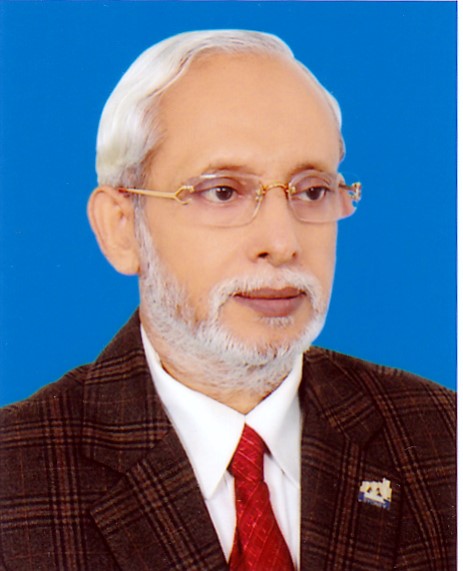
Abul Quasem Haider:
Writer. Founder Chairman of Easterofn University, Islamic Finance
and Investment plc.
Australian International School, and Bulbul Quasem Haider Mohilla College, Sandwip, Chittagong.
Former Senate member,
University of Dhaka and the former Vice President of FBCCI.
Date- 01.09.2025
Website: www.chintavabna.com, E-mall-aghaider@youthgroupbd.com
Mobile: 01552367883